How to Decide Whether Your Business Needs a Simple Equipment Maintenance Log Before a Breakdown Costs You a Job
Small-business owners who depend on physical equipment can prevent expensive downtime by starting a basic maintenance log before the first unexpected failure arrives.
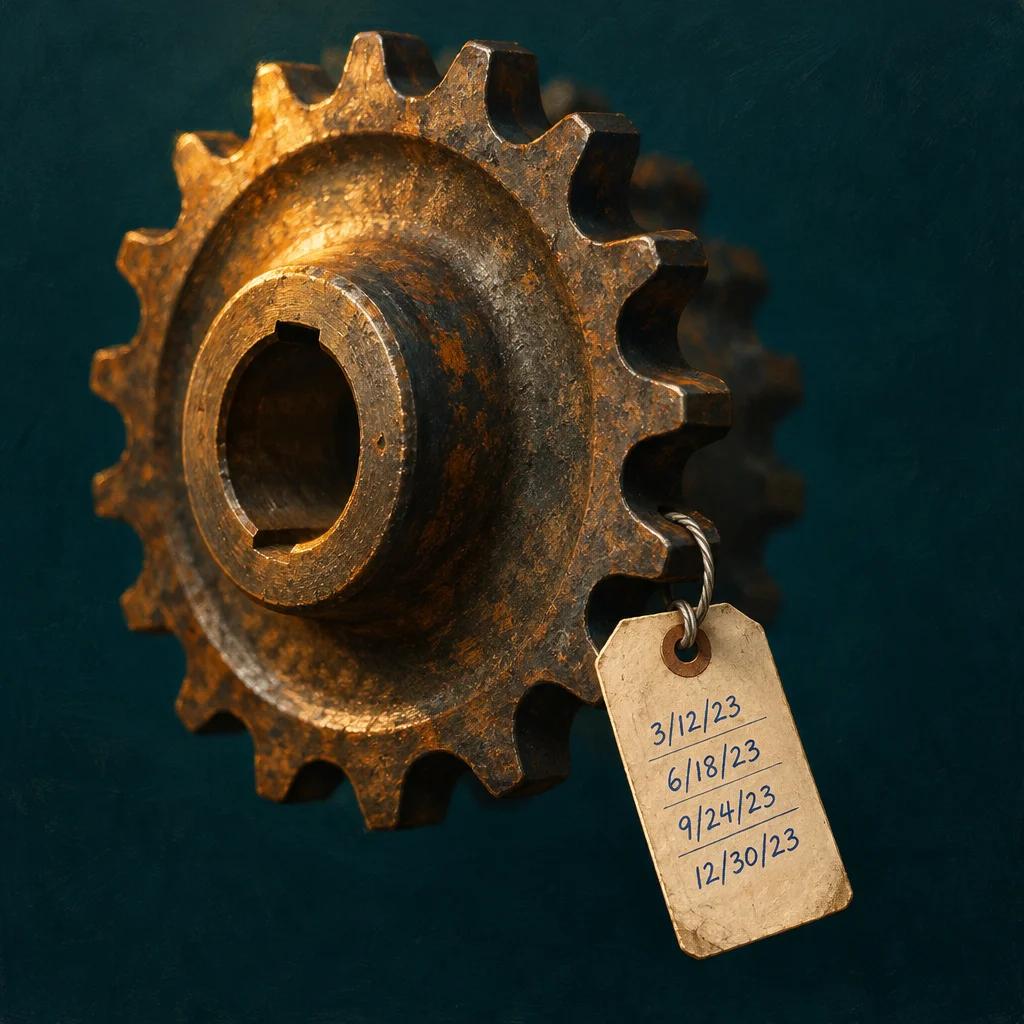
If your business depends on a piece of equipment to deliver work, a breakdown is not just an inconvenience. It can mean a cancelled job, a disappointed client, and an emergency repair bill arriving at the worst possible time. A simple maintenance log does not prevent every failure, but it gives you a fighting chance to spot problems early, stay ahead of scheduled service, and prove to yourself (and sometimes to a warranty provider or insurer) that you took reasonable care of your tools.
This article helps you decide whether a maintenance log makes sense for your situation, what to put in one, and how to start without overcomplicating it.
Who Actually Needs One
A maintenance log is worth building if most of the following are true for your business.
You own or lease equipment you cannot easily replace on short notice. Think pressure washers, refrigeration units, commercial ovens, vehicles used for service calls, compressors, or fabrication tools. If borrowing or renting a substitute while yours is down would cost you real money or delay client work, the equipment qualifies.
The equipment has a manufacturer-recommended service interval. Oil changes, filter replacements, blade sharpening, belt inspections, and calibration checks all appear in owner manuals for a reason. If yours has a schedule, you have a ready-made framework for a log.
You have had a surprise failure in the past year. One unexpected breakdown is a data point. It suggests the machine is aging, usage has increased, or maintenance has been inconsistent. A log helps you respond to that pattern.
More than one person operates the equipment. When multiple people use the same tool, nobody naturally owns its condition. Small problems get noticed but not recorded. A shared log fills that gap.
If your operation is fully service-based with no physical tools beyond a laptop and a phone, a maintenance log is probably not a priority right now. Spend your systems energy elsewhere.
What a Simple Log Actually Contains
You do not need software for this. A printed sheet in a binder, a shared notes file, or a tab in a spreadsheet all work fine. The goal is consistency, not sophistication.
For each piece of equipment, record five things.
- Date of each maintenance action. When did you change the oil, clean the filters, sharpen the blades, or run the scheduled inspection?
- What was done. A short plain-language note is enough. "Replaced air filter, checked belt tension, no issues found" is better than a blank row.
- Who did it. You, a technician, or a staff member. This matters when something goes wrong and you need to reconstruct what happened.
- Next service due. Either a date or a usage milestone such as hours of operation or miles driven. This is the line that prevents the log from being purely a history and makes it a forward-looking tool.
- Any problems noticed. Unusual sounds, performance changes, visible wear. These notes often reveal a slow-developing failure before it becomes a complete breakdown.
That is it. Five fields per entry. If a log requires more than two minutes to update after a service, it is too complicated and people will stop using it.
A Hypothetical Example
Imagine a small catering operation that owns two commercial refrigerators and a cargo van. The owner has no formal maintenance records and services equipment reactively, meaning only when something fails. One refrigerator has been running slightly warmer than its dial setting for three weeks, but nobody has written it down.
In this hypothetical, the owner starts a one-page log for each piece of equipment. The refrigerator entry for that week notes "running 4 degrees above set temp, coils may need cleaning." The owner schedules a coil cleaning for the following week. The underlying problem is caught before it becomes a full compressor failure during a busy weekend booking.
This is a constructed example, not a case study. But the logic reflects how small problems escalate when there is no habit of writing them down.
The Cost and Effort to Get Started
Building a basic maintenance log has near-zero financial cost. A printed template, a shared Google Sheet, or a dedicated notes folder costs nothing beyond thirty minutes of setup time.
The ongoing effort depends on how many pieces of equipment you track and how often they need service. For most small operations with two to five pieces of equipment, updating the log takes five to ten minutes per service event. That is a realistic ask.
If you want a slightly more structured option, several free spreadsheet templates for equipment maintenance tracking are available through small-business resource sites and the websites of trade associations in industries like food service, HVAC, and construction. Look for one that matches your service intervals before you customize it.
When a Log Is Not Enough on Its Own
A maintenance log records what you do, but it does not do the maintenance for you. The log only works if you also set a reminder to act on those "next service due" dates. A calendar alert, a whiteboard in your shop, or a recurring task in whatever project tool you already use all serve this purpose.
For equipment under a manufacturer warranty, review your warranty terms. Some warranties require documented proof of scheduled maintenance to honor a claim. If that applies to your situation, the log is not optional. It is evidence. Your warranty documents will spell out what is required, so read them directly rather than relying on a general summary.
For equipment covered under a service contract with a third party, the contractor's own records may already fulfill documentation requirements. Ask your provider what they track and whether you receive copies.
How to Start This Week
If you decide a maintenance log makes sense, here is a practical starting point.
List every piece of equipment your operation depends on. Pull the owner's manual for each one and find the recommended service intervals. Create one log entry per machine with the last known service date, even if you have to estimate it. Set a calendar reminder for the next service date on each item. Then put the log somewhere visible or shared so it actually gets used.
That first pass takes less than an hour for most small operations. After that, the habit is the hard part, not the setup.
The case for a maintenance log is not complicated. Equipment that gets consistent care tends to last longer and fail less often at bad times. Writing things down is how you make "consistent care" repeatable rather than accidental.